
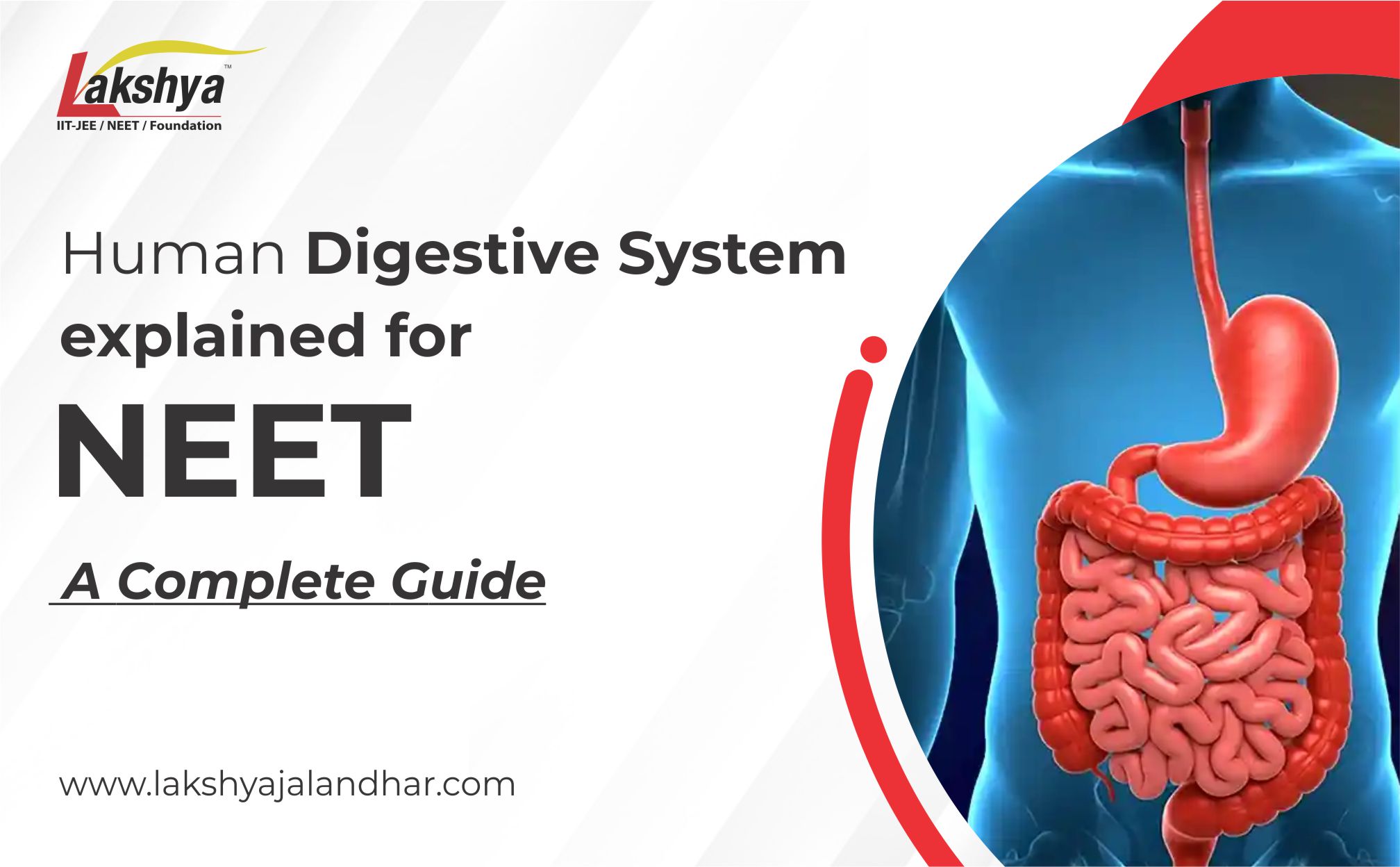
Human Digestive System in NEET: A Complete Guide
When it comes to the NEET Biology exam, the human digestive system is one of the major topics and scoring topics. If students have a comprehensive understanding of each organ, enzyme, and process, they will be able to easily tackle both conceptual and direct questions. In order to ensure proper digestion and absorption, it is more important to focus on understanding how the various components of the system interact with one another than it is to memorize information by heart.
Questions that are frequently asked from this chapter are designed to test not only factual knowledge but also conceptual comprehension simultaneously. Students who wish to do well in the course are required not only to memorise the organs and procedures but also to have an understanding of how the system works as a whole to convert food into energy.
In this article, the human digestive system in NEET will be analysed in a manner that is basic, organised, and focused on NEET. It will cover all of the key ideas, functions, and important aspects that you should keep in mind.
In the NEET exam, biology is the exam that carries 90 marks, so preparing for it can result in good scores in the NEET exam. Don’t worry if you’re feeling overwhelmed or don’t know where to start. NEET coaching in Jalandhar can help you get ready for the Biology test by making study plans just for you, telling you which topics are most important, and sharing tried-and-true tips.
Overview of the Human Digestive System in the NEET syllabus
In order for the body to be able to absorb and make use of complex food ingredients, the digestive system breaks them down. It includes the following:
- Alimentary canal(gastrointestinal tract)
- Accessory digestive glands
Main functions of the digestive system:
- Ingestion: intake of food
- Digestion: mechanical and chemical breakdown
- Absorption: nutrient uptake
- Assimilation: use of nutrients by the cells
- Egestion: removal of undigested waste
Structure of the alimentary canal
The lengthy, muscular tube that runs from the mouth to the anus is called the alimentary canal.
1. Mouth (buccal cavity)
The process of digestion begins in the mouth:
- Teeth: help in mechanical breakdown(mastication)
- Tongue: assists in mixing food and swallowing
- Salivary glands: secrete saliva containing salivary amylase(ptyalin)
Function:
Starch is broken down by salivary amylase, which results in the production of maltose.
Neet focus:
The pH of saliva is slightly acidic to neutral (~6.8).
2. Pharynx and oesophagus
- From the mouth, the food passes through the pharynx.
- In the process of moving food from the oesophagus to the stomach, a muscular movement known as peristalsis, which looks like a wave, is responsible.
Key point:
There is no digestion taking place in this area.
Stomach
The stomach is a muscular organ that is shaped like a J and is divided into three main regions: the pyloric, the fundic, and the cardiac regions.
Gastric glands secrete:
- Hydrochloric acid(HCl): creates an acidic medium(pH ~1.5–2)
- Pepsinogen: activated to pepsin(digests proteins)
- mucus: protects the stomach lining
Functions:
- Protein digestion begins in the stomach
- The transformation of food into chyme, a semi-liquid material, takes place.
NEET focus:
- HCl activates pepsinogen
- Renin is present in infants, which helps digest milk protein casein)
4. Small intestine(an important section for digestion)
The small intestine is divided into:
- Duodenum
- Jejunum
- lleum
This is the primary location where digestion and absorption take place.
Role of digestive glands
1. Liver
- It is the largest gland in the body
- Secretes bile juice(stored in the gallbladder)
Function of bile:
- The process of emulsification involves the disintegration of large fat globules into smaller droplets.
- enables the action of enzymes in an alkaline medium.
Key point:
Bile contains no digestive enzymes
2. Pancreas
It produces pancreatic juice, which comprises the following:
- Trypsin (proteins)
- Amylase (carbohydrates)
- Lipase (fats)
NEET tip:
Pancreatic juice is alkaline because it contains bicarbonates.
3. Intestinal glands(brush border enzymes)
It secretes enzymes like:
- Maltase
- Lactase
- Sucrse
- peptidases
These complete the digestion process.
Digestion of different nutrients
Carbohydrates
- Mouth: Starch → Maltose (salivary amylase)
- Small intestine: Maltose → Glucose
Proteins
- Stomach: Proteins → Peptones (pepsin)
- Small intestine: Peptides → Amino acids
Fats
- Small intestine only
- Bile emulsifies fats
- Lipase breaks fats into fatty acids and glycerol
Absorption of digested food
Most of the absorption that occurs in the small intestine occurs through villi, which are projections that resemble fingers and increase the surface area of the organ.
Key features of villi:
- Rich blood supply
- Presence of lymph vessels(lacteals)
What gets absorbed?
- Glucose and amino acids → Blood
- Fatty acids and glycerol → Lymph
Large intestine
The large intestine includes:
- Caecum
- Colon
- Rectum
Functions:
- Absorption of water and salts
- Formation of feces
Important point:
No significant digestion occurs here.
Egestion
The anus is used to remove the undigested waste. We refer to this process as defecation or egestion.
Important NEET highlights
- Peristalsis occurs throughout the alimentary canal
- Maximum digestion and absorption occur in the small intestine
- HCl does not digest food directly, but activates enzymes
- Bile has no enzymes, but is crucial for fat digestion
- Villi increase absorption efficiency
Tips to study this chapter for NEET
- Focus on NCERT diagrams and flowcharts
- Practice labelling diagrams
- Memorise enzyme names and functions
- Revise frequently using short notes
- Solve the previous year’s questions
Don’t worry; you can get help with your NEET coaching. They give you tests on certain subjects, ways to study, and regular tests to help you figure out what you need to work on. A professional can help you make your ideas better, get better at being accurate, and aim for a perfect score in Biology.
Take the next step toward your future. Join Lakshya Jalandhar and stay on track to achieve your ambitions.
Conclusion
Increasing your level of expertise in this chapter will not only increase your preparation for biology but will also give you a solid foundation for understanding human physiology. If you regularly practice diagrams and maintain consistency in your revision, you will discover that this topic is both interesting and satisfying within the context of your path toward the NEET.
